
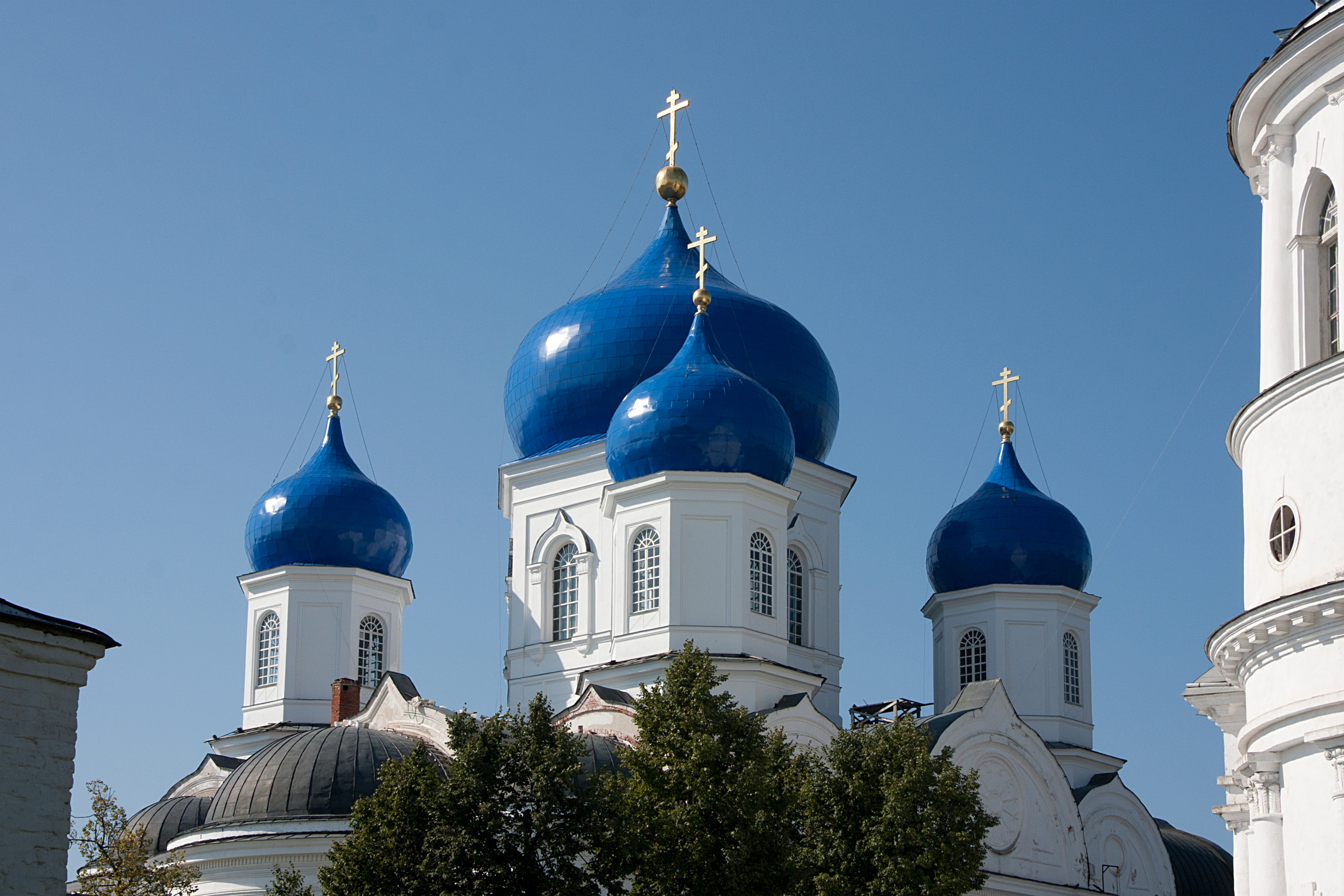
1. Overview
Orthodox Christianity represents one of the three major branches of Christianity, alongside Roman Catholicism and Protestantism. The Orthodox Church (often called the Eastern Orthodox Church) emphasizes apostolic continuity, liturgical worship, and the lived experience of faith as central to its theological vision. At its core, Orthodoxy understands itself as the continuation of the ancient Christian tradition, maintaining unbroken continuity with the apostolic Church through the succession of bishops, sacred liturgy, and theological heritage.
The Orthodox worldview understands faith as more than doctrinal assent; it is the whole lived life of believers within the community of the Church. Where some Western approaches emphasize individual conversion experiences or primarily forensic models of salvation, Orthodoxy frames salvation as theosis (deification)—a transformative process of participation in divine life. This shapes how Orthodox Christians understand God, humanity, creation, and the path to spiritual fulfillment.
2. Origins & historical context
The roots of Orthodox Christianity trace back to the apostolic Church of the first century and to the spread of Christian communities throughout the Mediterranean and Near East. The Christianization of the Roman Empire under Constantine in the fourth century marked a pivotal moment, setting the stage for ecumenical councils that would shape Orthodox theology and practice. The Council of Nicaea (325 AD) stands as the first Ecumenical Council and established foundational doctrines that remain central to Orthodox belief.
For much of its early history, Christianity existed as a unified faith with Eastern and Western expressions that developed distinct liturgical, theological, and organizational patterns. The Ecclesiastical Schism of 1054 marked a formal separation between the Eastern Orthodox and Roman Catholic churches, reflecting differences in ecclesial authority, liturgical practice, and theological emphasis.
A major chapter in Orthodox development is the history of Russian Orthodoxy. In 988, under Prince Vladimir, the Rus accepted Christianity through the Patriarchate of Constantinople, shaping cultural and spiritual identity for centuries. After the Ottoman conquest of Constantinople in 1453, Moscow’s role grew, and the idea of “Moscow the Third Rome” emerged—expressing a sense of continuity with the Byzantine Christian legacy.
3. Core beliefs
Orthodox theology is grounded in fundamental Christian doctrines, approached through the Church’s worship and patristic inheritance. At the center is the doctrine of the Trinity: God exists eternally as Father, Son, and Holy Spirit—three distinct persons united in one divine essence. This Trinitarian confession permeates Orthodox prayer, liturgy, and theology.
The Incarnation is likewise central: God the Son becomes human in Jesus Christ for the salvation of humanity. Orthodoxy emphasizes that Christ’s incarnation has cosmic significance, and salvation is understood as theosis—spiritual transformation by grace through participation in divine life.
- Trinity: God is Father, Son, and Holy Spirit—one essence, three persons.
- Incarnation: Christ is truly God and truly human, uniting humanity to God.
- Theosis: the goal of Christian life is union with God by grace—becoming “godlike” in love and holiness.
- Communion of saints: the Church is one across time; saints are venerated and their intercession is sought.
- Ascetic life: spiritual struggle aims at the transfiguration of the whole person—body and soul.
Orthodoxy affirms the Virgin Mary as Theotokos (God-bearer), emphasizing her unique role in salvation history. The veneration of saints follows from the Orthodox conviction that all the faithful are united in Christ—those on earth with those who have departed and with the saints in heaven.
4. Sacred texts & authority
Orthodoxy venerates Scripture as sacred and authoritative, yet approaches it within the life of the Church rather than as a text detached from worship and tradition. In Orthodox understanding, Scripture is not set against Tradition; instead, Scripture is received as a primary expression within the Church’s living Tradition, and the Church’s worship and history provide the context for faithful interpretation.
The Orthodox biblical canon differs in scope from many Western canons, and Orthodoxy also emphasizes the Septuagint—the ancient Greek translation of the Hebrew Scriptures—whose language and imagery deeply shape Orthodox liturgy and hymnography. Patristic commentaries and the wider spiritual tradition (including classic ascetical collections) provide guidance for reading Scripture with both literal and spiritual depth.
5. Worship & devotional life
The Divine Liturgy is the center of Orthodox worship and the Church’s chief action. The Eucharist is not merely a memorial; it is a sacramental reality in which Christ’s redemptive work is made present, forming believers into a Eucharistic people.
Orthodox worship is deeply embodied and sensory—sound, sight, incense, gesture, and sacred space are integrated toward communion with God. The transformation of the Eucharistic gifts is prayed through the epiclesis (invocation of the Holy Spirit), and communion is understood as a life-shaping participation in Christ.
Icons are central to Orthodox devotional life. They are not treated as mere decoration; they are understood as “windows” that invite contemplation and communion with the persons depicted. The iconostasis (icon screen) and the architecture of worship embody a theological vision that the visible world is capable of bearing divine presence.
- Liturgy: weekly (and festal) worship centered on the Eucharist.
- Prayer: corporate services and personal prayer (often including the Jesus Prayer).
- Ascetic practice: fasting, almsgiving, confession, and disciplined attention to the heart.
6. Diversity within Orthodoxy
While Orthodox Christianity maintains theological and liturgical continuity grounded in the ecumenical councils and patristic tradition, modern Orthodoxy includes multiple autocephalous (self-governing) churches—Greek, Russian, Serbian, Romanian, Antiochian, and others— recognized as being in communion with one another.
This diversity reflects historical and cultural particularities. The Church is often described as “unity in diversity”: liturgical style, language, devotional customs, and local practice may vary while the shared apostolic faith is maintained.
There are also historic ruptures. The Oriental Orthodox churches (such as Coptic, Armenian, Ethiopian) separated in late antiquity over Christological disputes, while preserving apostolic succession and sacramental life. Contemporary conversations and ecumenical engagement continue in various ways across these communities.
Within parish life, questions around women’s participation, leadership, and ministry are discussed in different ways across Orthodox communities. While the ordained clergy and episcopacy remain male, women play substantial roles in spiritual formation, parish life, teaching, philanthropy, and the wider witness of the Church.
7. Ethics, law, and daily life
Orthodox ethics flows from the conviction that moral life is inseparable from communion with Christ and participation in the Church’s sacramental life. The greatest commandment—to love God and love your neighbor—stands as the foundation of Christian morality.
In Orthodox thought, personal and social ethics interpenetrate: spiritual transformation of persons should bear fruit in mercy, justice, hospitality, and care for the vulnerable. Moral formation is not reduced to abstract principles; it is shaped by worship, spiritual practice, and the cultivation of virtue.
Monastic tradition, though specialized, influences the wider ethical imagination of Orthodoxy by emphasizing fasting, prayer, simplicity, and vigilance of the heart. Contemporary Orthodox ethics also engages modern challenges such as bioethics, environmental stewardship, and the complexities of living faithfully within secular societies.
8. Modern lived experience
Orthodox Christianity today navigates secularization, globalization, and life in pluralistic societies. Many Orthodox communities exist in diaspora contexts (outside historic Orthodox territories), where parish life becomes a focal point for worship, identity, and service. Some speak of “the liturgy after the liturgy”: the Eucharistic life extending into acts of love, justice, and witness beyond Sunday.
Contemporary pastoral realities include questions around mental health, spiritual care, and the integration of faith with psychological and medical support. Recent global disruptions, including the COVID-19 pandemic, also raised new debates within Orthodox communities about embodied worship, sacramental participation, and digital mediation of religious life.
Ecumenical dialogue has prompted fresh reflection on how Orthodoxy maintains distinctive theological identity while engaging other Christian traditions. Orthodox environmental engagement has also grown in visibility, grounded in a sacramental vision of creation as ordered toward divine purpose and thanksgiving.
9. Practitioner notes
For many Orthodox Christians, faith is experienced less as “ideas only” and more as a life of worship, rhythm, and formation over time. A client may describe their spirituality through practices (liturgy, fasting, confession, icons) rather than through abstract doctrinal categories. Avoid assumptions: some are highly observant, others culturally Orthodox, others in-between.
- “What practices help you feel grounded—prayer, liturgy, a spiritual father, fasting, icons?”
- “Are there seasons (like Lent) that change your routines, energy, or schedule?”
- “Are there words or assumptions about Christianity that feel unhelpful to you?”
- “Would it be supportive to integrate faith language, or would you prefer we keep it neutral?”
10. Further reading
Add 3–8 balanced resources (intro, a primary text like the Nicene Creed, a short liturgical primer, and a lived-experience resource). Keep the list approachable for practitioners.